

All the work you’ve done on your store to appeal to human shoppers, including design, UX, photography, and lifestyle branding, could soon become much less relevant.
That’s due to the rise of AI shopping agents: automated software that helps users find and purchase products. These agents don’t browse your store as customers do. They don’t care about your pop-up discounts, your brand story, or your parallax scrolling. Instead, they analyze structured data, product feeds, and API responses. Your hero banner and aspirational photos are invisible to them.
As AI-assisted shopping grows – ChatGPT alone handles around 50 million shopping queries a day — ensuring your eCommerce store is optimized for these agents is becoming increasingly important.
In this guide, we cover what AEO means for eCommerce stores and what you can do about it now.
What is AEO (and How Is It Different from SEO?)
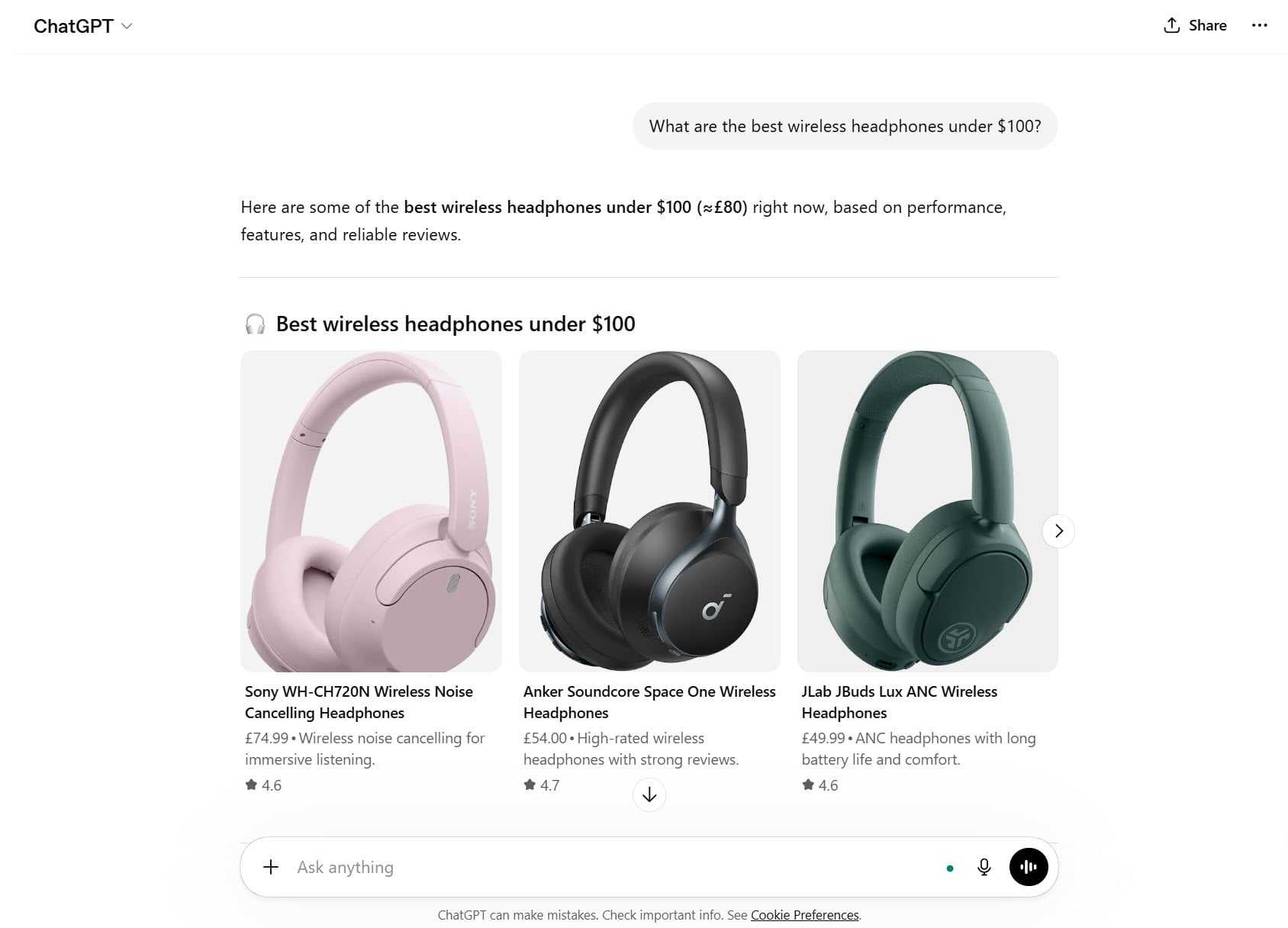
If you run an eCommerce store, you already know SEO. You optimize product pages, write keyword-targeted content, and try to rank on Google so a human clicks through to your site. AEO (answer engine optimization) requires a different approach.
With AEO, you’re not optimizing for a search results page. You’re optimizing to be the answer an AI gives when someone asks, “What are the best wireless headphones under $100?” or “Find me a merino wool base layer that ships to Canada.” The AI doesn’t show a list of results; it gives a short, curated list of recommendations. If your product isn’t in it, you’re invisible.
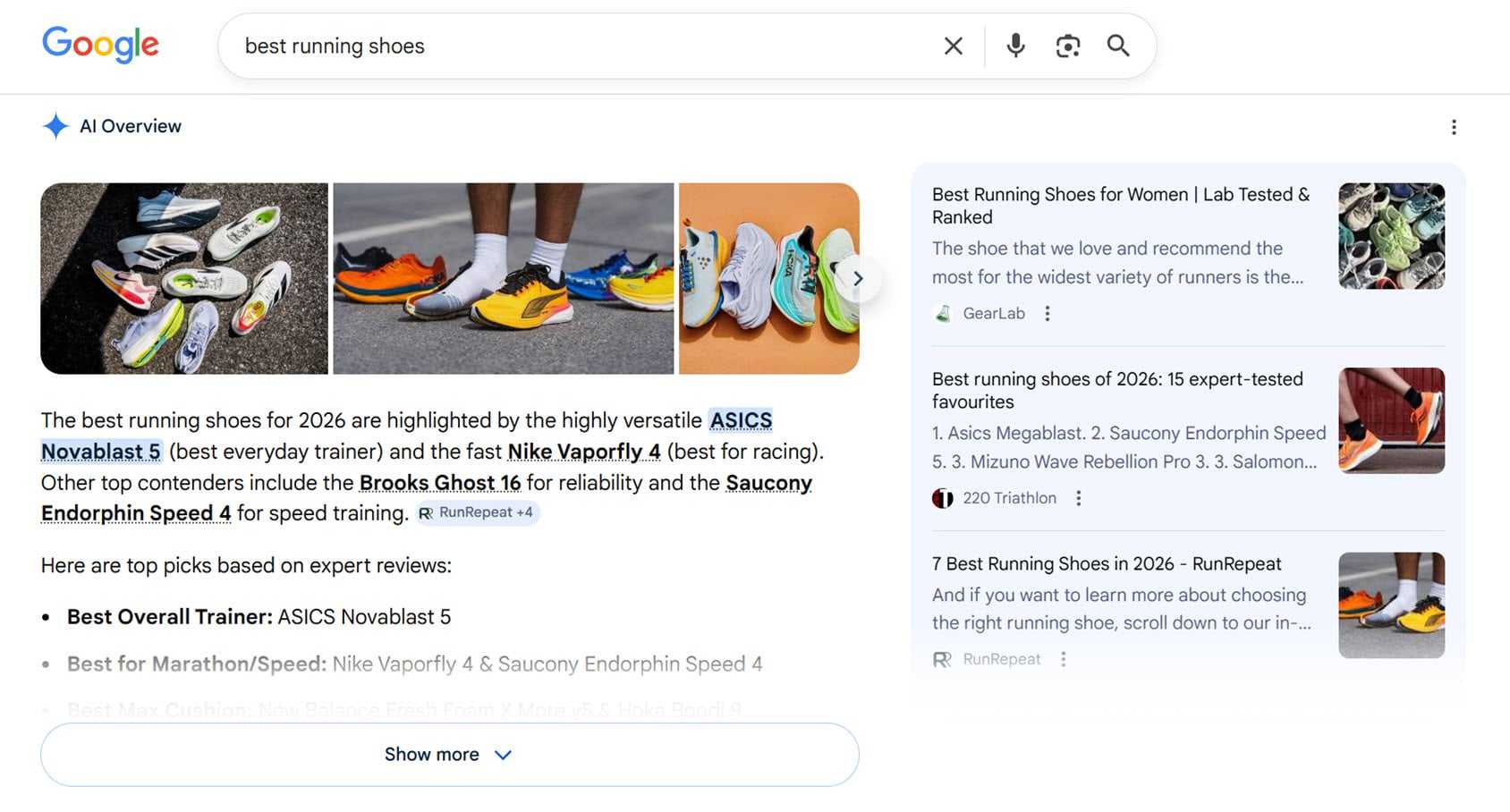
Traditional search still dominates, accounting for around 40% of web traffic vs. just 0.25% for AI assistants, but the change is already affecting click-through rates on Google.
For example, AI Overviews have reduced average CTR by around 15% on keywords where they appear. That means even if you’re ranking well in traditional search, AI-generated answers are siphoning clicks away from stores that aren’t cited in those answers.
The conversion data is mixed but worth paying attention to. One study of 94 eCommerce stores found that ChatGPT traffic converted at a 31% higher rate than non-branded organic search, while a larger study of 973 sites found organic search still outperformed ChatGPT overall.
Either way, ChatGPT sessions grew 1,079% in 2025. The traffic is coming; the question is whether your store is ready for it.
How AI Agents Actually “See” Your Store
When a human shops online, they see product images, read reviews, and get drawn in by branding and storytelling. AI agents skip all of that. Instead, they read code.
Specifically, they look for three things:
Structured Data (schema markup)
This is the most important piece. JSON-LD schema markup tells AI agents exactly what your product is, what it costs, whether it’s in stock, and what customers think of it.
The key schema types for eCommerce are Product, Offer, AggregateRating, and FAQ. Without clean, comprehensive schema, your products are effectively invisible to agents.
Product Feeds
AI platforms are building their own shopping ecosystems. OpenAI has published a Product Feed Spec for merchants who want their products surfaced in ChatGPT.
Google Merchant Center remains essential, too, as it feeds into both traditional Shopping results and AI-generated recommendations.
APIs and commerce protocols
This is where things are moving fast. WooCommerce 10.3 introduced MCP (Model Context Protocol), which lets AI assistants interact directly with stores.
Stripe has launched its Agentic Commerce Protocol for checkout. Google announced its Universal Commerce Protocol (UCP) in January 2026, backed by Walmart, Target, Shopify, and others. McKinsey projects agentic commerce will reach $3-5 trillion globally by 2030.
Essentially, what this means is that if an agent can’t programmatically verify your price, stock level, shipping time, and return policy, it will skip your store in favor of a competitor whose data is machine-readable.
The Data Debt Problem
Most eCommerce stores have a hidden problem: their product data is a mess. This often includes inconsistent SKUs, missing attributes, and vague descriptions written for humans but meaningless to machines. This is data debt, and it’s the biggest barrier to AEO readiness.
For example, a product description that says “premium cotton blend t-shirt, perfect for everyday wear” tells an AI agent almost nothing. But “100% organic cotton, 180gsm, GOTS certified, crew neck, relaxed fit” gives it everything it needs to match your product to a query.
The most common gaps seen in WooCommerce stores include:
- Missing identifiers: No GTIN (Global Trade Item Number), MPN (Manufacturer Part Number), or brand fields filled in. Without these standardized product codes and brand information, agents can’t reliably match your products against competitors.
- Incomplete shipping and return data: If an agent can’t confirm delivery time and return policy from your structured data, it won’t recommend you.
- No standardized attributes: Sizing, materials, and compatibility details are often buried in free-text product descriptions rather than entered in structured product fields. When the same size is stored as “Large,” “L,” and “LG” across different products, it makes it impossible for an agent to reliably filter or compare.
- Marketing copy doing double duty: Product descriptions optimized for persuasion but containing none of the specific, factual data agents need.
While this fix isn’t glamorous, filling gaps in your catalog is the most impactful way to prepare for AEO.
An AEO Playbook for WooCommerce Stores
The good news is that most of the work involved in AEO isn’t new technology. Instead, it’s about removing ambiguity from your catalog and making your product data machine-readable.
Here are three steps you can take today:
Audit and Fix Your Structured Data
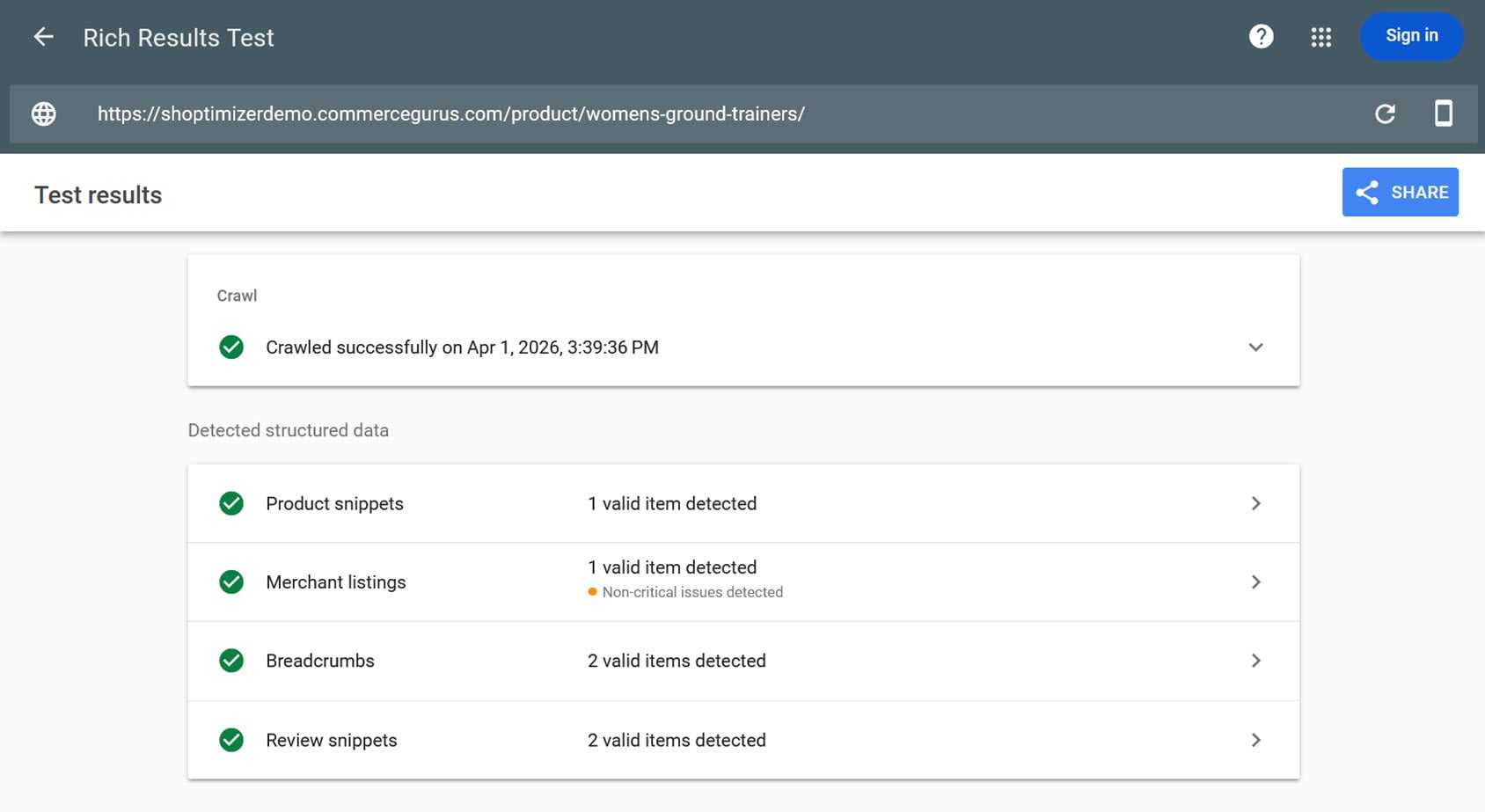
Start by testing your product pages with Google’s Rich Results Test. This is a useful proxy for how machine-readable your product data is.
Check that your Product schema includes price, currency, availability, SKU, and GTIN. Make sure your merchant listing markup includes shipping rates, delivery times, and return policies.
These are the fields that matter most for AEO as they’re what an agent needs to confidently recommend your product. Review data helps, too. Google’s guide on sharing product data is worth reading for the full picture.
If you’re using a plugin like Yoast SEO or Rank Math, much of this can be generated automatically, but you still need to make sure the underlying product data is filled in. Shoptimizer includes built-in schema support, so if you’re already using it, you have a head start.
Don’t just test your best-selling product. Spot check across categories, variable products, and out-of-stock items, as schema errors often hide in edge cases.
Standardize Product Attributes Beyond Marketing Copy
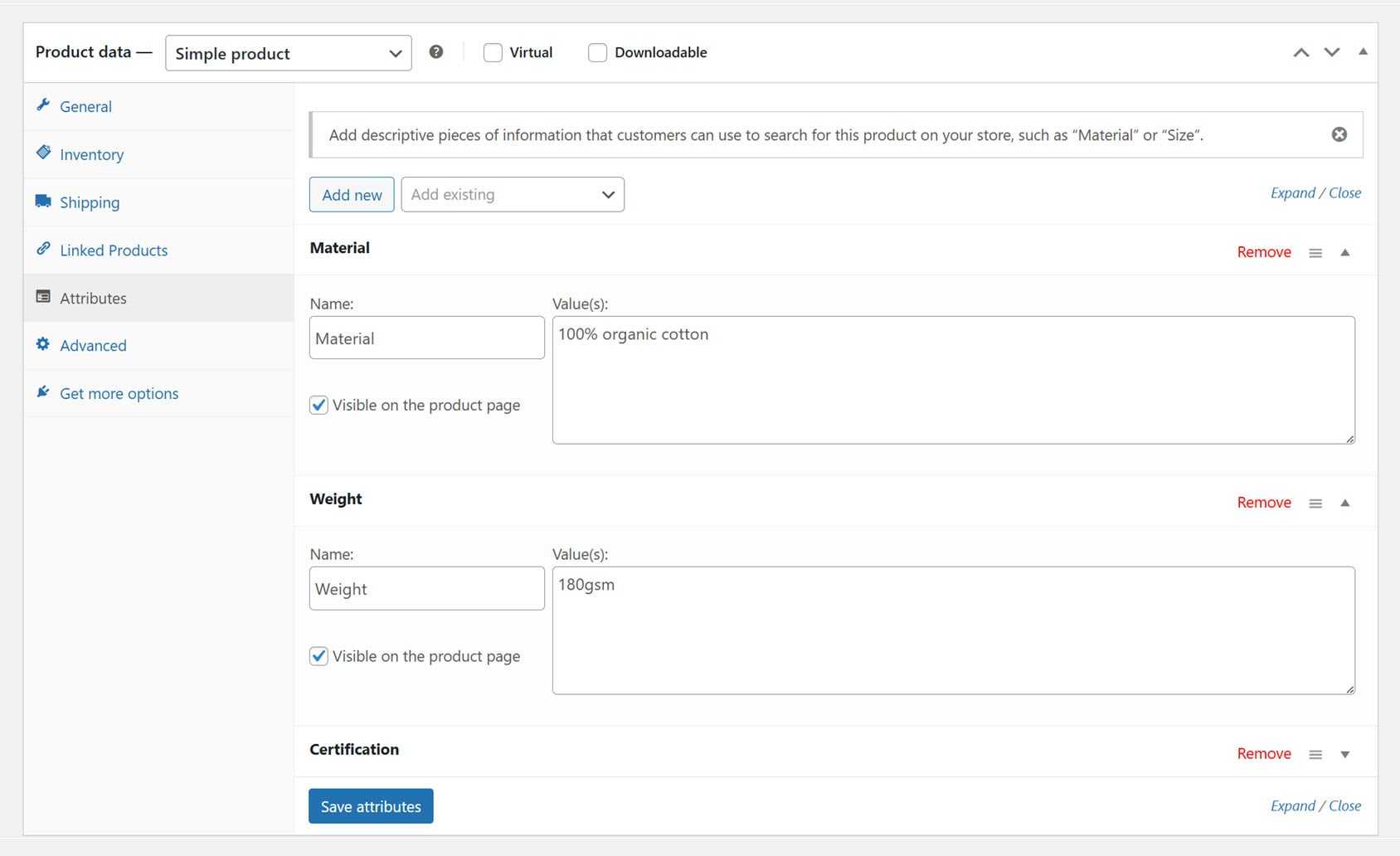
Every product in your store needs machine-readable attributes: materials, dimensions, weight, compatibility, and certifications.
In WooCommerce, this means using the built-in attributes (predefined fields for things like color, size, or material) and taxonomies (categories or classifications) properly, rather than putting detailed specs only in the product description.
Go to the Product Data panel and fill in every relevant field. If you sell clothing, that means standardized sizing, fabric composition, and care instructions as structured attributes. If you sell electronics, that means compatibility, wattage, and connector types.
The goal is that an AI agent could answer any factual question about your product without reading a single sentence of your description.
Optimize for Semantic Search, Not Just Keywords
Traditional SEO taught us to target specific keywords, but AI agents work differently. They use natural language processing to understand meaning, not just match strings.
Write product descriptions that answer questions directly. “Compatible with iPhone 15 and later models” is useful to an agent. “Works with the latest devices” is not. Be specific about who the product is for, what it does, and how it compares to alternatives.
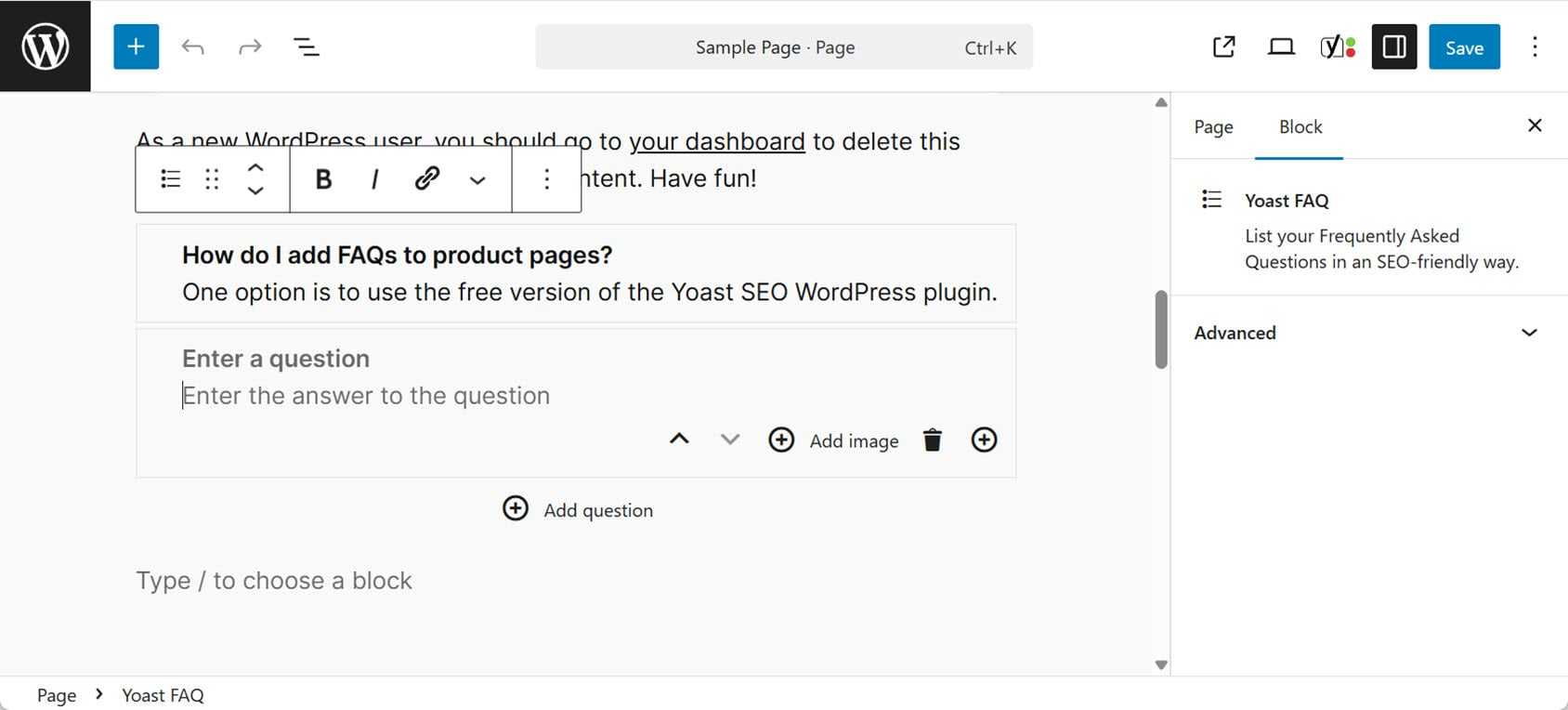
Consider adding FAQ-style content with schema to your product pages. Google now limits FAQ rich results to certain authoritative sites, but the structured data is still valuable for AEO.
AI agents can read and use FAQ markup to answer specific product questions, even if Google no longer displays it as a rich result. Think about the questions a shopper would ask an AI assistant (“is this waterproof?”, “will this fit a king-size bed?”, “does it work with WooCommerce 10.x?”) and answer them explicitly in structured FAQ blocks.
If you’re using Yoast SEO or Rank Math, both include FAQ blocks that automatically generate schema.
Keep Your Catalog in Sync Across Every Surface
Clean structured data only helps if it’s consistent across your channels. If your product page says an item is in stock, but your feed says it’s unavailable, or your shipping estimate differs between your schema and your checkout, agents may skip your store.
To counter this, review your product feed, inventory sync, pricing, shipping, and return data regularly so the same facts appear consistently across all channels where your products are exposed.
In WooCommerce, check how your Google feed syncs and make sure variations, excluded products, and out-of-stock items are handled properly. The Google for WooCommerce plugin syncs feed changes automatically, but it’s worth spot-checking that it’s working as expected.
Fast, cacheable pages matter for AI shopping agents too. If a crawler gets a slow response or times out entirely, your store may simply not appear in the results. Our CommerceGurus Turbo plugin pushes cached pages to Cloudflare’s global edge, so AI crawlers get a fast response every time, wherever they’re hitting from.
Clean Data Wins the Next Decade
The stores that win the next phase of eCommerce won’t necessarily have the best design. They’ll have the cleanest, most machine-readable data.
AI-assisted shopping is still small relative to traditional search, but the growth is clear, and the infrastructure is already being built.
WooCommerce has MCP. Stripe and Google have their commerce protocols. ChatGPT is handling 50 million shopping queries a day. The question isn’t whether AI agents will shape how people buy — it’s whether your store will be one they recommend.
The good news is that everything in this playbook — structured data, standardized attributes, semantic content, feed consistency — also makes your store better for traditional SEO and for human shoppers. There’s no downside to starting now.
Start with a Rich Results Test on your top product pages and fix what’s missing. Then work through your catalog. The stores that do this work now will have a structural advantage that’s hard to catch up to later.
eCommerce AEO FAQs
What is AEO in eCommerce?
AEO stands for answer engine optimization. It’s the practice of optimizing your product data, so AI tools like ChatGPT, Gemini, and Perplexity can find, understand, and recommend your products. Where SEO focuses on ranking in search results for humans to click, AEO focuses on being the answer an AI gives directly.
Does AEO Replace SEO?
No. Traditional search still accounts for around 40% of web traffic, while AI assistants sit at about 0.25%. But the two work together. The structured data, clean attributes, and semantic content that improve your AEO also strengthen your traditional SEO. Think of AEO as an additional layer, not a replacement.
How Do I Check if My WooCommerce Store Has Proper Schema Markup?
Use Google’s Rich Results Test. Paste any product URL to see what structured data is present on the page. Check for Product, Offer, price, availability, SKU, and GTIN fields. Spot check across different product types, not just your best seller.
What Structured Data Do AI Shopping Agents Look For?
The essentials are price, currency, availability, SKU, GTIN, shipping rates, delivery times, and return policies. Product descriptions that include specific, factual attributes (materials, dimensions, compatibility) also help agents accurately match your products to queries.
Can I Use FAQ Schema on My WooCommerce Product Pages?
Yes. While Google now limits FAQ rich results to certain authoritative sites, the structured data is still useful for AI agents. Both Yoast SEO and Rank Math include FAQ blocks that automatically generate schema in the WordPress block editor.



 How to Turbocharge WooCommerce Product Gallery Speed
 Supercharge your shipping setup for WooCommerce
 Fraud Protection and Detection for WooCommerce
 WooCommerce Support
One practical gap I’d add: validation has to be prompt-based, not just schema-based. We’ve seen clean Product/Offer markup still get ignored when shipping or returns weren’t explicit in crawlable copy. I keep a small sheet of test prompts and compare it against the AI search stats we keep updating every month.